
Rules · Explainer
Drones and robots you can bring to MRC Ghana 2027: what the rules allow
Drones must be small, indoor and remote-controlled. Each robot sport sets its own size, weight and hardware limits. Here is what the official rules allow before you build or buy.
MRC Ghana 2027 team6 min read
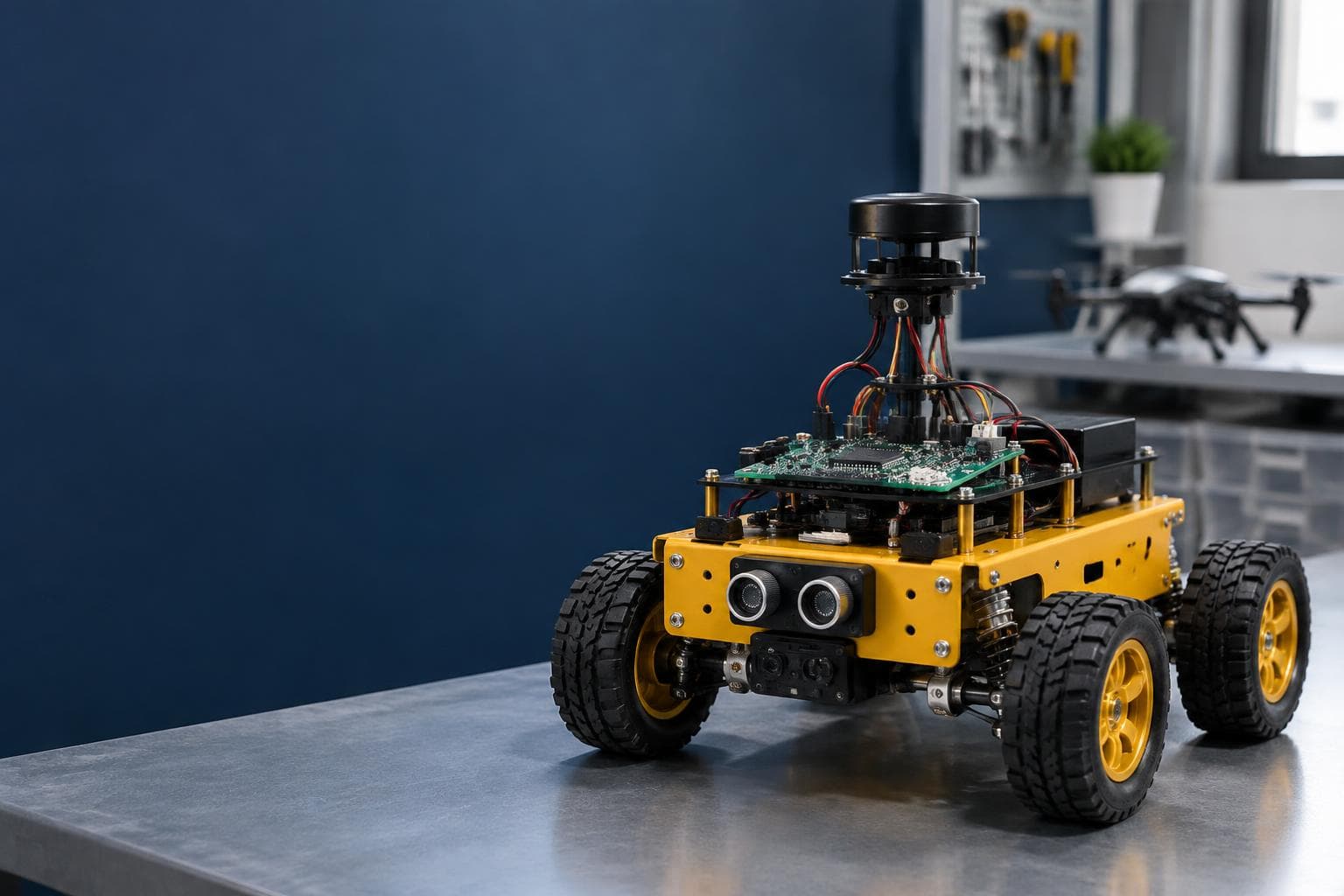
Before a team builds or buys anything for MRC Ghana 2027, it needs to know what the rules allow. Drones and robots are both limited, and each sport sets its own size, weight and hardware rules. This guide summarises the official H.E.R.O. category pages, checked on 12 November 2026. The official rules always take precedence, so check them before you buy or build.
Teams can download the 12-slide guide as a PDF to share with their coaches and parents.
In brief
- Drones are remote-controlled only, no bigger than 25 × 25 cm and no heavier than 300 g, including the battery.
- Drone Soccer 3×3 uses a drone ball of up to 20 × 20 × 18 cm and 160 g, and the organisers set the model.
- Robots range from fully autonomous (Marathon and Archery) to remote-controlled (Football 3×3) and semi-autonomous (Shooting).
- Every machine passes technical inspection on the day. A machine that fails cannot compete.
Drones
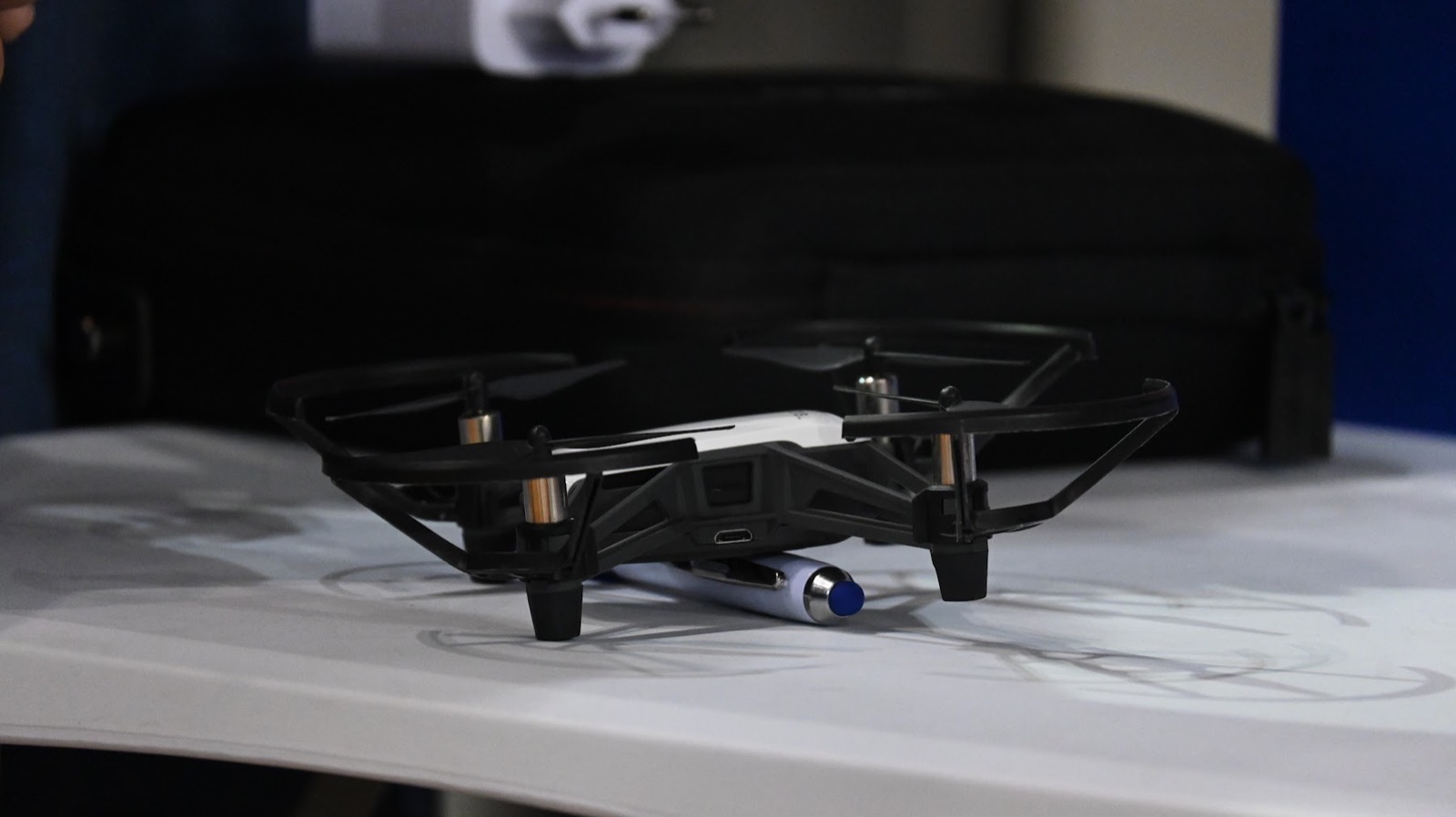
Drones is a solo indoor piloting mission. The drone must be remote-controlled, with no autonomous flight. The main limits are:
- Size: 25 × 25 cm at most, including propeller guards and anything mounted on the drone.
- Weight: 300 g at most, including the battery, guards and camera.
- Flight height: 1 to 2 m, held without the pilot controlling altitude. The drone must stay at or below 2 m at all times.
- Propellers: plastic, with guards that cover the full perimeter.
- Batteries: LiPo or LiHV, 1S or 2S only. A team may bring up to two packs, one in use and one spare.
- Fuel and gas: not permitted for take-off or thrust.
- Connections: wireless links are allowed only for flight control (RC, BLE or Wi-Fi).
Drones in the Kids, Teens and Senior, and Adults categories compete separately. The age bands are Kids 10–12, Teens and Senior 12+ to 18, and Adults 18+. Every team has a coach aged 20 or over.
Which drone models are allowed?
The official page lists drones that are indicatively permitted. Examples include the Tello and Tello EDU (with guards), Parrot Mambo (with guards), Robolink CoDrone Mini and Pro, Bitcraze Crazyflie 2.1 (with guards), BetaFPV Cetus and Cetus Lite (1S), and VEX AIR with its autonomous functions disabled.
The official page also lists drones that are not permitted. These include DJI Mini, Mavic, Air and FPV models, Parrot Anafi, Autel EVO, 3S to 6S FPV racers, cinewhoops with propellers over 3 inches, GPS and outdoor drones, and carbon frames without full propeller guards.
Compliance is judged by the drone's specifications, not by its name. DIY and 3D-printed micro drones are excluded, except in the Adults category, where DIY drones are allowed if they meet the specifications.
Pre-approval and inspection
A model that is not on the indicative list needs approval before the event. Send the Organising Committee a technical sheet with the model, dimensions, battery, weight and propeller guards, along with photos or a video. Approval must be obtained at least 7 days before the event.
Every drone then goes through technical inspection on the day. The frame must pass through a 25 × 25 cm check, the guards and the 1S or 2S battery are verified, the kill switch is tested, and the drone must hold a height of 1 to 2 m without the pilot controlling altitude. Each drone is given a unique ID, and re-checks take place before each phase. A drone that fails the final on-site check does not compete, even if it was approved in advance.
Drone Soccer 3×3: the drone ball
Drone Soccer 3×3 is an alliance game. Three drone balls from one school play in a netted arena. Each ball is a remote-controlled drone in a protective casing, and only the Golden Ball Drone can score.
The rules for the drone ball are:
- Size: 20 × 20 × 18 cm, with a tolerance of ±1 cm. The ball must fit the control box without pressure.
- Weight: 160 g at most.
- Lights: at least red and blue, so each alliance is visible.
- Motors: only the motors supplied with the drone ball, as the sport recommends.
- Batteries: at least one spare battery per ball.
For 2027, an alliance must come from one school. A school needs three teams, and each team needs its own drone ball. A ball that fails the game-day check cannot compete. Teams should confirm with the organisers which drone-ball model is specified before they buy anything.
Robots
Robot sports have their own rules. Here is what each one allows.
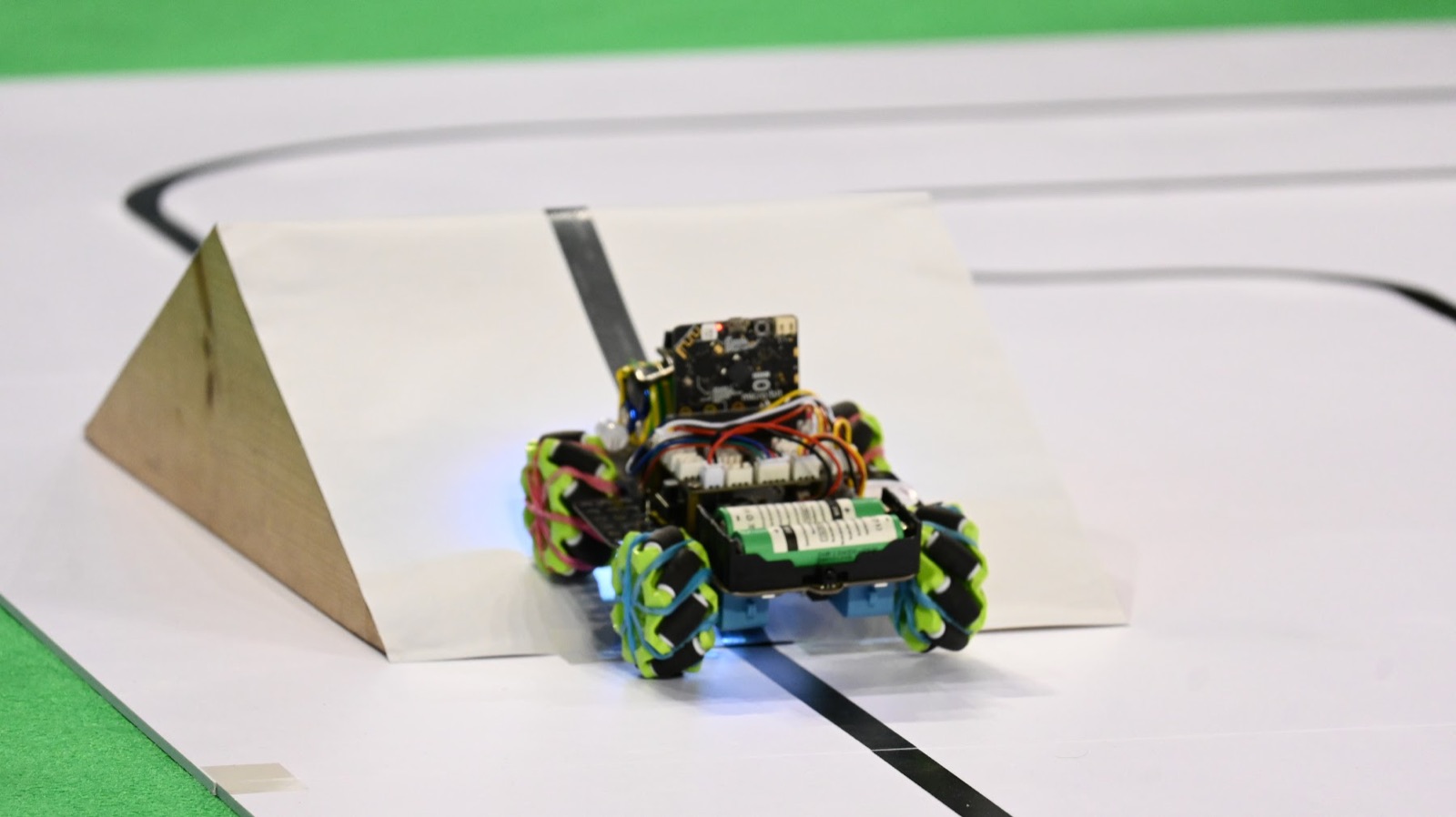
Marathon is a fully autonomous line-follower. It has two divisions:
- Basic uses an educational kit with its official controller, such as LEGO, VEX or mBot. It allows one processor, four motors and four sensors. External microcontrollers, 3D-printed parts and modified batteries, motors or sensors are not allowed.
- Advanced allows custom electronics such as Arduino, ESP32 or Raspberry Pi, custom circuit boards, separate batteries and 3D-printed or machined parts. A controller may be used only to start the robot.
Both divisions share the same size limits: 25 × 25 cm, no more than 1 kg, and 5 to 15 cm high. Pneumatics, pullback motors, gases and circuits over 24 V are banned in both. A robot that does not meet the Basic rules is placed in the Advanced category.
Football 3×3 is remote-controlled, by remote or app. Venue Wi-Fi is not available to teams. The robot must fit a 20 × 20 cm footprint, weigh 700 to 800 g and stand no more than 15 cm high, not counting the team identifier. It needs a motor-driven kick that stays inside the 20 × 20 cm footprint when fully extended, with up to four motors and one microprocessor. The ball is the LEGO Mindstorms ball (part 41250, 52 mm, red or blue). Alliances of three teams must come from the same school.
Shooting is a semi-autonomous launcher. It must fit 25 × 25 cm and weigh no more than 500 g. It is shaped like a pistol, with one grip, a trigger and a forward-facing muzzle, and its main outer surface must not be metal. A hub and a button or pressure sensor fire the launcher, one foam dart at a time. It must beep one second before firing. Sensors to find targets are allowed. Springs and laser aiming are permitted, but propellants, pneumatics and modified darts are not. Remote control is not allowed.
Archery is a fully autonomous robot bow. After the start button is pressed, it adjusts its own aim height and fires an arrow. The bow must be held vertically, not like a crossbow. The robot must fit 25 × 25 cm and weigh no more than 800 g, and with a fully drawn arrow it must be no longer than 30 cm in the shooting direction. It may use one processor, four motors and four sensors. Rubber bands must be no wider than 4 mm, and the arrow must weigh under 30 g with a rounded tip. Remote control and wireless connections are not allowed during a match.
Before you build or buy
- Read the official rules page for your sport and category.
- Check your drone or robot against the size, weight and battery limits.
- If your drone is not on the list, request pre-approval at least 7 days before the event.
- Confirm the drone-ball model and alliance rules with the organisers if you are in Drone Soccer or Football 3×3.
- Register your team at mrcghana.com/register by 15 January 2027.
Registration is an expression of interest, not a confirmed entry. The MakersPlace reviews each entry against the official rules and contacts the applicant.
Sources
- H.E.R.O., MRC Drones rules: https://www.he-ro.gr/mrc-drones
- H.E.R.O., MRC Drone Soccer 3×3 rules: https://www.he-ro.gr/drone-soccer
- H.E.R.O., MRC Marathon rules: https://www.he-ro.gr/mrc-marathon
- H.E.R.O., MRC Football 3×3 rules: https://www.he-ro.gr/mrc-soccer
- H.E.R.O., MRC Shooting rules: https://www.he-ro.gr/mrc-shooting
- H.E.R.O., MRC Archery rules: https://www.he-ro.gr/mrc-archery
These pages were checked on 12 November 2026. The 2027 rules may still change, so check the official pages before you build.
MRC Ghana 2027 · 19–20 February 2027 · Accra